This blog is a continuous work in progress, fluidly charting my diverse interests and reflecting the far reaching range of my tastes. Frequent subjects of discussion include literature, sports, politics, pop culture and artistic motivation. You will find thoughtful essays and stream of consciousness rants, reviews of books written by others and the presentation of my own fiction - novel excerpts as well as short stories. What it is today may not be the case tomorrow. Welcome to A Line A Day.
I had the pleasure of being interviewed at Lexi Flint's Author Alcove. Curious about what she had to say regarding Patches of Grey, what she chose to ask me, and what my answers were? Then hop aboard the merry go round and read on...
Sometimes life isn’t simply black or white, meaning can be found in THE PATCHES OF GREY, a novel by Roy Pickering
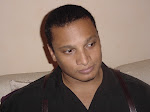
Author Roy L. Pickering, Jr., a native of the U.S.V.I of St. Thomas was raised in the boroughs of New York and currently resides with his wife Erin in New Jersey. Roy, a former English major at NYU writes short stories and novels that examine the human condition.
Patches of Grey is his debut novel which follows the life and struggles of high school student Tony Johnson who dreams of a life outside of the box that his address, race, society, and family places him in. Constantly at odds with his father, Pickerings main character wonders ” With everything the world had to offer, Tony marveled at how the golden nectar of barley and a box filled with moving pictures managed to placate his father. Why didn’t he need more, or at least comprehend why others might?”
Tony’s attempt to escape his current life through higher education is further complicated by his interracial relationship with a classmate, increasing the tension between father and son. “You think a couple of new laws and some tokens in high places makes everything fine and dandy?” Lionel asked. “You don’t actually believe that changes what they think of us, do you? Getting good grades in school don’t mean you know shit about life, boy. I could have five PHD’s, but that wouldn’t change nothing. I could click my heels and think good thoughts all day long, but they’ll still see me as a nigger. You’re my son, so how do you think they see you?”
This novel should be required reading for all students inspiring them to not be limited by their circumstances but to rise above and succeed despite the obstacles they must overcome on their life’s journey.
I had the pleasure of picking this author’s brain this past week. I enjoyed our interview and am happy to introduce you to this wonderful “new” author.
Thank you Roy for visiting Lexi’s Author Alcove we will start with the easy questions first…
This morning I happened upon the blog of paranormal author Jo Lynne Valerie. She posed some interesting questions that I felt compelled to answer about why someone is defined as a writer, by themself as well as by others. I liked a response that came after my own in which the person wrote that one can be able to dance reasonably well without being considered a dancer, or sing pleasantly enough without being considered a singer, so surely not everyone who has written should be considered a writer. Now everyone dances and sings and writes, but when it comes to the latter while everyone does scribble thank you notes and emails and shopping lists, surely not everyone has it in them to write a book. Writing an entire book (I'm not referring to a ten page children's book here but a text with some heft to it) is most definitely an accomplishment, even it the thing happens to be atrocious. That's why people will congratulate you even though they haven't read it and have no idea if it's coherent, just as someone will congratulate a woman for giving birth even if she hasn't parented yet and they have no idea if she'll be any good at it. The initial congratulations is earned by the act of labor. Writing a book, writing a readable book, and writing a good book are three very different achievements indeed. If you only manage to pull off the first task, it's still more than many who think of themselves as having writing talent manage to do. In short, you can write without talent and you can be talented without writing. And unfortunately, you can also write with talent without being read by very many. Below is what I wrote in response to her query.
* * * * *
I suppose I hold a distinction in my mind between "writers" and "those who have written books". Yet I don't have a hard and fast definition of where the line is to be drawn. As one with an old school mindset about the art and business of writing my impulse is to say that those who do it primarily with monetary gain in mind, who would quickly abandon it if something less taxing and more lucrative was stumbled upon, are not true writers. Writers are artists who create because they must, right? Whether or not they find an audience and make a profit is beside the point. They tell their stories because the alternative is implosion, then move on to the next one. Surely that's why Hemingway and Faulkner and all the other legends put pen to paper, right? On the other hand, I consider talent (part God given, part very hard work to gain mastery of) as a critical ingredient as well. Truth is, there are some who write because they feel it's a calling who do it so poorly I'd hesitate to call them writers. And there are some who come up with a "gimmick", perhaps latching on to a trendy genre of the moment, who write primarily because they've figured out how to make it pay, and do it well enough (even if with more head than heart) that respect must also be paid. You ask: Is there really a difference between authors who write books geared toward marketability, from those who write a book because they believe in it? I answer: Yes, they are very different types of people. But that aside, if both these types of writers can "bring it" then both types will satisfy their audience, and in the end the reader is both jury and judge. If you've earned the right to call yourself writer, regardless of how and why you earned it, readers will let you know.
It is obviously essential today for writers, particularly those who self publish or are published by small houses, to gain a measure of expertise at marketing and promoting if they want readers to find their books. These are critical components in becoming a "book seller", but have nothing whatsoever to do with being a "writer". Writers today perform multiple tasks because it's hard to grab people's attention with so many competing distractions out there. It's essential to wear the hat of both writer and book seller if you want to move units. These tasks are related to each other, but are not one and the same. A writer who doesn't sell much because he/she doesn't market well is still a writer. And an author who does sell many copies because he/she plays the game well does not automatically qualify as a talented artist on account of this. Some are merely effective salespeople and the product they're hawking just happens to be a book.
* * * * *
If you have read my prose, a short story or perhaps one of my novels or my children's book, yet have yet to meet me in person, it's because I fall under the category of one who defines himself as a writer by the writing he has done, not by the strength of advertising campaign. You probably have not seen me at a book festival or heard me at a bookstore reading, though I have dabbled a little. Chances are that even if you actually want it, you don't have my autograph. The extent of my PR blitz to date has been confined to the infinite internet. Slowly but surely I am planning to change that, to get out there and meet with potential readers, press the flesh like someone running for office. I'm up for kissing baby foreheads if that's what it takes to make a sale, not because of the money, but because a major reason I write is for it to be read. My stories are not meant to be strictly for me. Even if the writing of some of my tales has served a self therapeutic purpose, my desire is always for the eyes of others to fall upon my prose. If the mountain won't come to me, then I'll head off to the mountain. Public speaking is not a strength of mine, but life is too short not to take your best shot at it. If you see me at a book signing someday and I seem at all nervous, a big smile and a book purchase will go a long way.
So much of what I have had to say lately, particularly that expressed in writing, initially comes out one tweet at a time. I'd consider this a bad thing except that Twitter's constraint of 140 characters and the fact that I sometimes receive tangible proof that people are paying attention has turned out to be liberating. Who knew I had so much to say? Well, truth is, I did. But now others, mostly strangers, do as well. An actual audience. Nothing wrong with that to go along with my slowly growing list of blog followers. For my latest commentary, this one about the writing process, see below. Responses always have been and always will be greatly appreciated, especially now that I've adjusted my blog settings to keep out the Spam. So please share your own thoughts after perusing mine. Happy reading, and for the aspiring authors who happen upon this entry, happy writing as well.
Since joining Twitter I've read countless tweets joining forces with countless snippets of advice elsewhere in cyberspace giving authors tips ranging from the rather obvious to the pretty useful.
These innumerable tips for authors have regarded how to query, to submit, to market, to promote, to sell, etc. Tons of information out there to be sopped up like gravy with a biscuit.
Whether you're self pubbed, pubbed by small publisher, or a minor author pubbed by a big publisher scarcely aware of your existence, much of the promotional work is in authors' hands nowadays.
Literary agents want authors to do their work for them so pitches to editors are made easy. Editors want authors to do their work for them so pitches to marketing department are made easy. Marketing department wants authors to do their work for them so pitches to public are made easy. Quite a lot heaped on plate of author who thought his/her work was done by completing their book. Turns out the work has just begun.
Some authors are better at promotion than others. Some have more of a temperament for it or are more industrious or more tech savvy or have more time to dedicate than others. All must play the game if they wish to sell much more than a handful of copies.
Who better to sell your sweat/blood/tears than you? Writers are no longer allowed to simply be writers. They must now be PR people as well. C'est la vie in the world of publishing 21st century style.
So it's understandable why there are so many out there advising authors on how to better promote themselves. But how about advising the aspiring on how to write?
There are all sorts of writing courses out there, but on the most basic level one can't be taught how to be a writer. Simply put pen to paper and let your words flow. Your brain and heart and imagination will determine which ones come out in what order.
As a child I decided I wanted to be a writer. As a young man I decided to write a novel. Conceived plot & characters in my head. Now what?
I knew I could get plenty of words on paper via stream of consciousness. The sum total would make a story, but would it really be a novel?
I decided this technique would not result in a real novel. It would be too raw, without the shape readers need. What I required was a template to work from.
There is no better teacher of becoming a novelist than the completed novels of others, preferably good ones of course. One problem though. Every book I had read prior to attempting to write my own was read strictly for pleasure, or for school assignment that then became pleasure.
I needed to study a novel, really study it. How do I make dialogue authentic so it doesn't read as something written, but rather, something said?
People rarely make speeches. They talk over each other, they umm and ahh. They have trouble coming up with right word sometimes or lose their train of thought in the middle of expressing it.
People think as they speak, about what they're saying, about what they want to avoid saying, about other things related & unrelated to the words coming from their mouths. They think a million times faster than they speak. Many thoughts can pass through a character’s mind in the time it takes to speak a line or two.
Convincing dialogue takes some time to master, coming more naturally to some writers than others. An author cannot stop at just mastering dialogue though. Readers need to see the characters & their surroundings. If you want to focus primarily on dialogue, write a play.
The reader needs to see what the characters observe & what the characters miss. Such description & dialogue need to seamlessly intertwine. Some do the describing in more artsy fashion than others, but whatever your style it cannot be neglected.
When I decided to make a serious attempt at writing a novel I picked a published one up to serve as instruction manual. The novel I used as my "instruction manual" was Ordinary People by Judith Guest. Not a bad choice at all.
Patches of Grey is actually the second novel I started writing. I made my first foolishly brave attempt when in high school. Surrendered a few chapters in but wrote enough (probably quite badly) to know I had a full book in me someday.
My boss at the first job I got after graduating college was a copywriter. When I told him of my literary aspirations he asked how many pages I could write in a day. Ten was my confident reply. How long would you say the average novel is, he asked next. 300 pages I supposed. Write one book per month then, he said. Easier said than done, that’s for sure, but his point was effectively made. You want to write…write.
NOW ACCEPTING REVIEW REQUESTS FROM INDIE AUTHORS ---
I plan to review independently published novels (with perhaps a sprinkle of non fiction thrown in) on a regular basis when the calendar turns to 2017. No genres barred, which is not to say that I will read anything/everything suggested to me. I may take a pass on most for I intend to be picky, my selection criteria based strictly on what sounds like "my kind of book". DIVERSITY welcomed, PRINT preferred. In addition to a synopsis I'll want to see a brief excerpt from your book to help me decide. For a taste of my style, type "book reviews" into the Search bar. Or you can peruse my collection of reviews at goodreads. Send queries to mudhousebooks@gmail.com -------------------------------------------------------------------
Roy Pickering is the author of the novels Matters of Convenience & Patches of Grey, as well as the novella Feeding the Squirrels which you can find presented here in serialized form. A sampling of his prose is showcased at RoyPickering.net. Roy once blogged here in tandem with his wife. Erin's presence is still felt through her artwork in many of the postings.



 Posts
Posts


