


I went on a brief Twitter rant the other day about self published / indie authors, inspired by the claim of Sarah Taylor that Self-Publishing is no longer a dirty word. True? Depends on who is saying it, I believe.
“Self-Publishing is No Longer a Dirty Word”: Sarah Taylor’s Indie Book Fair Keynote Address http://t.co/CqkJl7Gwot #selfpub #amwriting
— IndieAuthorsAlliance (@IndieAuthorALLI)
Perhaps not. Yet about 98% of the time I find a new book blog & check out its Review Policy, it says "I do not review self pubbed books".
— Roy Pickering (@AuthorofPatches)
So the stigma is still there. Most book bloggers are not here for indie authors even though they themselves are indie book reviewers.
— Roy Pickering (@AuthorofPatches)
To thrive as an indie author your best bet is to have a pre existing platform other than writer of fiction. Sell yourself first.
— Roy Pickering (@AuthorofPatches)
If you're not comfortable with this, if you just want to write stories & let them speak for themselves - good luck with that!
— Roy Pickering (@AuthorofPatches)
If ur a blogger who LOVES books, I assume u support indie stores, indie authors, print. You don't just accept electronic ARCs from Big 5.
— Roy Pickering (@AuthorofPatches)
Shout out to Libraries too but I couldn't fit them into 140 characters.
— Roy Pickering (@AuthorofPatches)
My ODE TO THE LIBRARY
This is work for white people and people of color to do, sometimes together, sometimes apart. It’s work for writers, agents, editors, artists, fans, executives, interns, directors, and publicists. It’s work for reviewers, educators, administrators. It means taking courageous, real-world steps, not just changing mission statements or submissions guidelines. ~ from Diversity Is Not Enough: Race, Power, Publishing by Daniel José Older
Powerful facts based MUST READ piece by Zetta Elliot on Black Authors and Self-Publishing
Starting someplace, any place, is a good start. Good compared to not starting at all and just maintaining status quo anyway.
— Roy Pickering (@AuthorofPatches)
If many black authors can't get agents/publication deals, so they self publish, but you as a book blogger won't review self pubbed books...
— Roy Pickering (@AuthorofPatches)
...Then consider yourself part of the problem, part of the reason that we need to cry out #WeNeedDiverseBooks
— Roy Pickering (@AuthorofPatches)
A Line A Day: Response to Garrison Keillor's position that: When everyone's a writer, no one is http://t.co/QJ0rZKdCBU
— Roy Pickering (@AuthorofPatches)
Any reviewers or book clubs, perhaps interested in finding indie gems by authors of color, care to check out PATCHES OF GREY?
— Roy Pickering (@AuthorofPatches)
You know what time it is. #PatchesOfGrey pic.twitter.com/8HZCf9hjio
— Roy L. Pickering Jr. (@AuthorofPatches) June 21, 2020
As life unravels, will the blood they share be strong enough to hold them together?
— Roy L. Pickering Jr. (@AuthorofPatches) March 4, 2021
Patches of Grey by Roy L. Pickering Jr. https://t.co/SSwgZAOZ83 via @amazon
If you burn through piles of books each year, plz consider adding #MattersOfConvenience to your #readathon & reading challenge #tbr lists. pic.twitter.com/fZHX24rPse
— Roy L. Pickering Jr. (@AuthorofPatches) January 3, 2017
Dear #DiverseBookBloggers who love #ownvoices. Matters of Convenience by Roy L. Pickering Jr. https://t.co/gaLGxFRWIy is out via @amazon
— Roy L. Pickering Jr. (@AuthorofPatches) January 11, 2017

Check out the interview I conducted with indie author, Todd Keisling. If support of indie authors is hard to come by from various parties in the publishing industry machine, at the very least we need to support each other. Below are reviews written for a few books I've read that were self published. One of them took off (no, I'm not talking about 50 Shades of Grey) in a big way. Perhaps it's just a matter of time for the others.
 No Child Left Behind? The True Story Of A Teacher's Quest by Elizabeth Blake
My rating: 5 of 5 stars
Education reform is front and foremost in people’s mind as our new President and his adminstration grapple to determine what measures will be most effective, and what steps will be affordable in this time of recession. Obama recently stated that American kids spend too little time in school, putting them at a disadvantage with other students around the globe. This is a debatable statement since while it is true that kids in many other countries have more school days, it's not true they all spend more time in school. But it is valid to say that in the United States there are many examples of gains when time is added to the school day, and as result, many schools are going beyond the traditional summer school model in which schools give remedial help to kids who flunked or fell behind. Summer is a crucial time for kids, especially poorer kids, because poverty is linked to various problems that interfere with learning. No Child Left Behind? The True Story of a Teacher’s Quest by Elizabeth Blake is a memoir about a woman who for 3 difficult years taught in a school district with focus on education for “at risk” students. As a small town, middle aged white woman, to a degree it is a fish out of water story. Mrs. Blake is not from the world inhabited by the students she tries with varying degrees of success to teach, but she takes the plunge and gives a laudable effort. The cover copy led me to believe this book would be comparable to movies I had seen about education in inner city schools such as Lean on me, Stand and Deliver, Dangerous Minds, etc. But that did not really turn out to be the case, because those stories which received Hollywood treatment had a substantial degree of stability to the narratives. They were each focused on a single class, or a single school, and the events to unfold took place over the course of at least a full semester. As viewer you grew attached to the teachers/principals/students because a fair amount of time was vested in them. Due to what struck me as an incredibly ineffective education set-up, Mrs. Blake only gets to be with a particular group of students for 7-week blocks of time. She is just beginning to get to know some of the students in a class when time is up and she must move on to the next one. On top of that, she doesn’t even have the luxury of remaining at a single school. Against her wishes she ends up teaching at no less than 3 schools over the course of 3 years. With such lack of continuity, “No Child Left Behind?” has no opportunity to be a character study with the exception of Mrs. Blake. Rather, this compelling memoir is an observation and indictment of a particular American school district which most likely does not stand alone in its callous inadequacies. We learn a bit about the sampling of students she chooses to zero in on, and some of them are indeed dangerous “bad seeds”. But considering the bizarre ineptitude exhibited by several of her supervisors, people shown to have total disregard not only for the student body but also for the teachers trying in vain to make a difference, and it’s no wonder that a bad situation is set up to only get worse. Mrs. Blake is a determined woman with deep faith in God and conviction in her goal not to abandon the children who need her guidance, but within 3 years she is burned out and understandably leaves the school system behind her. Towards the end she quotes Gandhi: “You may never know what results come from your actions. But if you do nothing, there will be no result.” One wonders if Gandhi himself would have been able to remain in that school district much longer than did Mrs. Blake. She cites the chilling statistics that up to 50% of new teachers will leave the profession within their first five years, estimating that in her school district it was more like 90%. Yet the tone of her memoir is not one of bitterness, but of hope that change will someday come; satisfaction that she did do something to help as many kids succeed as she was somehow able to reach; and gratitude that in the process of affecting their lives they blessed her own.
View all my reviews
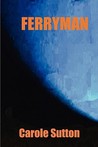 Ferryman by Carole Sutton
They say the devil is in the details and you will find a rich supply of them in this mystery novel, transporting you to 1970's Cornwall, England, racing aboard a sleek yacht or attending a fancy costume ball where far more than meets the eye is there to be discovered by those in search of answers. One of the people following trails both hot and cold is Steven Pengelly, a man wrongfully convicted of murder who gains his freedom after two years of imprisonment when the body of the woman he was supposed to have killed surfaces from the depths of the sea, freshly deceased. Although he has no further need to clear his name, the sister of a woman gone missing convinces him to join her desperate rescue mission. A man who does need redemption is Alec Grimstone, the detective who saw to it that Steven was convicted and now must follow the only path that will lead to a clean conscience, and to the true abductor/killer behind an escalating series of crimes. I will delve no further into the plot, with Ferryman being a mystery that I don't wish to spoil for anyone. Better to pick up a copy for yourself and follow the twists and turns that lead to a villian whose perversity is only matched by the clever measures he takes to maintain his depraved secrets. If you are a whodunnit fan, and who isn't to some degree, be sure to add Carol Sutton to your reading list.
View all my reviews
 The Time Cavern by Todd A. Fonseca
This book transported me back in time to when I was an avid 10-year old reader, which is both ironic and apt since it features 10-year old time travelers. But I’ve gotten ahead of myself (yet more time traveling) as I pen this review about a most wonderful young adult novel – The Time Cavern by Todd A. Fonseca. I typically do not read much fiction geared towards pre-teens and those in their early teenage years, having left that period of my life decades behind. Prior to The Time Cavern I suppose the last book I read that fit this bill was the first Harry Potter book. There was a tiny bit of buzz about Ms. Rowling’s wizardry series (perhaps you’ve heard of it too) so I decided to check out Part I and found it to be an enjoyable read, though it did not inspire me to pick up additional titles in the saga. I appreciate the ultimate achievement of the Harry Potter books beyond making Rowling a gazillionaire and launching a number of movie star careers. Millions of young people in their formative years who may not otherwise have been turned on by reading in a day and age where one’s phone provides as much entertainment as an arcade decided to check out a book (and then another and then another) because tremendous buzz made it a trendy thing to do. No doubt a good many of them moved beyond the Potter books and became lifelong readers, just as the Jules Verne books I read as a grade school kid sparked my addiction to books, not only as a vociferous reader but also as a writer. Young people lucky enough to stumble into The Time Cavern will be similarly affected. In it, a bright, curious, mechanically inclined boy named Aaron moves to a new house in a rural area with his family. Initially he feels like a fish out of water but his acclimation to a new home is sped up when he befriends Jake, a classmate who is not crazy about her real name “Jacqueline” or about being passive and stereotypically “girlish”. She has a spirit nearly as adventurous as Aaron’s, which is a good thing because they soon find themselves on an adventure upon discovery of a century old diary page that eventually leads them to a most extraordinary tree. Throughout the course of this briskly told tale Aaron and Jen become detectives on the trail of a case that is simultaneously ancient and futuristic. Their interest in scholastics, particularly science, serves them well as they unearth clues in a number of inventive ways, including a most ingenious use of a tanning bed. The backdrop to their caper (which also put me in mind of the Dan Brown blockbusters but featuring considerably younger protagonists and minus the violent aspect of adult thrillers) is an Amish community, people who Aaron comes to learn have basically suspended time with their lifestyle choices rather than joining the progressive march of technology. Whether it’s a trip to a cornfield or to a planetarium, each experience throughout the narrative is learned from and the knowledge is used to propel Aaron and Jake’s progress into uncharted territory. Fonseca cleverly intertwines the following of time honored traditions with science fiction elements to generate an enthralling plot that is sure to lure any young reader away from his wii game system. As this book shows, kids today may be considerably different than kids of even just one generation prior, but what kids of all generations and all ages have always been drawn to is the opportunity to embark on a thrilling adventure. The Time Cavern showcases masterful storytelling that will immediately be passed forward to one of my nephews. I highly recommend picking up a copy for the young explorers that you love.
View all my reviews
 From Where the Rivers Come by Terin Tashi Miller
Set in the not especially distant past, Terin Tashi Miller transports readers to India. You'll feel as if you are walking the streets of Benares or Dehli, tasting the food, experiencing the heat, brushing away the dust, inhaling smoke from the funeral pyres, experiencing the claustrophobia of jam packed train rides, and taking in the vividly detailed sights. The first person narrative comes from the perspective of a journalist who is foreign to India by birth and race, but has been immersed in the culture long enough for it to be ordinary rather than exotic to him. He is not so much stranger in a strange land as an observer who has seen what India offers, recognizes the differences and similarities between his American homeland and the country from where his paychecks are earned, and accepts them with minimal judgement as the ways of the world. Miller's novel is neither plot heavy nor a character study, but rather, a story of place and slow to change times which subtly indicates the fine line between escaping where you are and who you are.
View all my reviews
 Elf on the Shelf by Carol V. Aebersold
An instant charmer. We'll see if it results in more nice than naughty behavior from my spirited 3 year old daughter over the couple weeks leading up to Christmas. She has definitely bought into the idea (after a little skepticism at first - "it's just a toy") that there's a scout elf situated in our home who waits until after she goes to sleep to fly back to the North Pole and file a report on her actions, then heads back to our house to be found the following morning in a different spot.
 Finger Rhymes by Nigel Tetley
My rating: 5 of 5 stars
How many utterly charming poems do you think can be written on the subject of the fingers at the end of your hands? Turns out the answer is at least a dozen, for that is what Nigel Tetley gives us in his delightful children's book - Finger Rhymes. Just as the title promises, this book is a collection of poetry on the theme of fingers. Each one is as sweet as the smile a child will give in response to them. Several compare the shape fingers can make to seemingly unrelated objects. Like magic a young child will realize in Playground Fingers that one finger can become a seesaw, two a slide, three a a teepee, four become rope swings, and five are a roundabout spun around on to great delight. In Green Fingers little gardeners discover that one finger is a slug, two a pair of shears, three a garden fork, four grooves in the soil, and five petals of a flower. Other poems bring children by the hand and imagination to the beach, helping out parents in the kitchen or with tailoring, a day at the beach, and a fireworks display. Each one shows the reader and the read-to that there are countless ways to look at the world, and at ourselves. Starting with the five fingers that we have on each hand. The clever poems are accompanied by wonderful illustrations done by Peter David Scott - realistically rendered with a retro feel to them. From my own ill-fated attempt at writing a rhyming board book years ago, I know that maintaining a steady cadence when composing sound-alike sentences is trickier than one might think. Nigel Tetley nails each poem with a snap of his talented fingers. If you're in search of a gift for a child still being read to or perhaps just starting out with reading for themselves, I highly recommend Finger Rhymes.
View all my reviews

xxxxxxxxxxxxxxxxxxxxx

xxxxxxxxxxxxxxxxxxxxx

INDIE AUTHORS PINTEREST BOARD
Whether it's independently published or not, when you discover a great new book (even it's only new To You) please be sure (word of mouth on and off social media is enormously appreciated by authors) to SHARE THE LOVE. Reviews are awesome!!!

#BlerdBookClub Poll's up for June! And it's all #Blerds Show em some love and vote!
https://t.co/MbK8fUoqJi pic.twitter.com/qOysxnZn3i
— Thelonious Legend (@TheLegendBooks) May 8, 2015




 Posts
Posts


