Sunday, September 21, 2014

DOUBLE FAULT - a short story for tennis fans and beyond

A post shared by Roy Pickering (@roylpickering_author) on


I marveled as yet another backhand stroke took off like a canon blast from my racquet strings. The ball headed directly toward its intended destination, sending my opponent scrambling cross court in vain. He was tiring, each step increasingly labored. Half an hour ago the same shot probably would have been returned, but my rather masterful placement had begun to pay dividends. It was evident to me from our very first match that I was the superior athlete. Strangers would have reached this conclusion strictly at a glance, based on the gut he carried about while my own abdomen is nearly as flat as it was in my teenage years. An accommodating metabolism rather than strict diet and a cardiovascular enhancing work-out regimen bore primary responsibility for this. 

Despite my higher level of fitness, I continued to be winless against Melvin at tennis. This was at least our fiftieth match. As usual, it was two out of three sets to determine the victor. Quite unusually, our latest match had made it to a third set. Even if a win over Melvin was not guaranteed, I had already achieved the moral victory of not being vanquished in straight sets as had happened in each of our previous matches. 

But success of the merely moral variety would be vastly insufficient on this day. I reached this conclusion as soon as I took the second set six games to four. Now that I had Melvin in deep waters, there was no excuse for not stepping up and causing him to drown in a barrage of drop shots and overhead lobs. Either I would secure match point or else cause him to collapse in exhaustion, granting me victory by forfeit. Losing to him after making it this far was unacceptable to my ego. Although our matches are friendly in nature, this being especially critical since we are next door neighbors, this did not change the fact that I am a competitive person and my pride can only take so much battering. 

For this reason, unbeknownst to Melvin, I had been taking private lessons with a former professional for the past couple months. Vlad’s expertise was a rather expensive luxury, but my improved performance against Melvin proved that it was paying off. The brand new racquet I was playing with upon recommendation from Vlad handled beautifully. These factors inspired me to step on to the court brimming with confidence that Melvin’s term of having my number was coming to an end. 

My optimism was dealt a blow when he served to start the match and immediately sent an ace past me. He proceeded to hold me at love for the first game, and the second, and the third. By the time he sent a slice into the net to give me my first point of the day, Melvin was well on his way to taking the first set six games to zero 

My head was hanging low when he double faulted to start the second set. When he sent a forehand wide to give me the next point, my pulse began to quicken just a bit. I then hit a winner down the line to reach forty-love and suddenly the impossible was within reach. Every game I ever took from Melvin in the past had been on my own serve. I had come close on a number of occasions, but never managed to break him. The rally that followed was the longest played between us in all of our matches. He kept going to my backhand, knowing it to be the biggest of my various weaknesses, but I continued to respond and send the ball back to the deepest part of his side of the court. Each of his shots had a little more spin than its predecessor, forcing me lower and lower as the ball dipped with increased pace. My tenth consecutive backhand clipped the net, remained suspended in mid-air for what felt like an eternity or at least the length of the chick flicks my ex-wife liked to rent, and finally fell on Melvin’s side. The point and the game was mine, and even more importantly, the invincible aura of Melvin’s service game had been punctured. 

Riding the high of this unexpected turn of events, I easily held serve to go up two games to none. As I faced the first of his serves in the next game, cockiness was replaced with nervousness. Ordinarily, I was at relative ease when playing Melvin because defeat seemed inevitable each time out. Now that the opportunity to reverse this trend had presented itself, I tensed up with concern that I would blow it. 

Plenty of muscle was put behind the serve to come. The best I could do was to take a lunging stab at the green blur. Yet I somehow managed to get the center of my shockingly expensive racquet in the right place at precisely the right time, returning the ball even faster than it had arrived. Melvin could do nothing but watch it rocket past him for a winner. My nerves instantly settled in realization that from this point on I would be giving as good as I got. Five points later I broke him for the second time to go up three games to nada. Things got a little tougher for me after that as Melvin turned up his game a few notches. But it was too little too late to prevent me from taking the set and removing a tremendous almost literal weight from off my shoulders 

Our first ever third set was an epic seesaw battle. Neither of us could maintain momentum because the other kept snatching it back. After twelve grueling games we were knotted at six apiece. Rather than playing the type of tie breaker used in the pro game, we decided to play one more set to decide the matter. I spun my beautiful new custom strung racquet on the ground. If the letter at the end of the handle came up W, it would be my serve. M would put the ball in Melvin’s hands and the match on his racquet. I had been unable to break his serve in the third set. Unlike previous contests between us, he had not been allowed to casually go through the motions and depend on my unforced errors to give him a substantial number of free points. Each one needed to be earned by performance at maximum capacity. I was dueling with him at his best and ably holding my own 

As the racquet went round and round, I looked closely at my worthy adversary’s face for signs of weakness. What I found was a stone face expression and enough perspiration trickling down it to form a waterfall. He was breathing heavily from our long rallies and my strategy of running him over as much court as possible before finishing off a point. My greater stamina would have to see me through because luck was not on my side. 

The Wilson racquet fell and we both peered to find an upside down W. Melvin came close to fully suppressing a grin, but not quite. He walked back wearily to the service line and prepared to finish me off. I set up to return fire with conflagration, unwilling to concede that I would have to wait for another day to end my losing streak.

His first ace flew millimeters beyond my outstretched racquet. The second went right down the T with such ferocity that I didn’t bother to move for it, conserving my energy for when it might do me some good. His legs may have been shot but there was nothing wrong with his serving motion. When his next serve went into the net, I knew I would have an opportunity to take the next point. Melvin was adept at a few different styles of serve and skillful at unpredictable placement of them. This made dealing with his first serve a formidable challenge. But when it came to his second serve, he was as reliable as the rise and set of the sun. It came with minimal speed and kicked up high, forcing the receiver back deep. It was a safe serve that forced a timid return, leaving the point up for grabs until someone seized hold of it. I did just that to win the point, and the one after followed an identical pattern. 

With the decisive game even at thirty, I watched another first serve ace fly by to set up match point for Melvin. On the next point he needed to go to his second serve again, and after a few shots back and forth I hit a stunning cross court winner for deuce. Advantage next went to Melvin followed by another deuce. The scoring replicated itself nine more times until two consecutive drop shots fell short of his stumbling reach. Advantage was finally in my favor. 

His next serve went blatantly wide. This was it. Match point for me on his second serve. I involuntarily held my breath, but quickly realized that breathing would be far more useful. Be calm, be cool, stay focused, and above all else I reminded myself, keep your eyes on the ball. I took a greatly condensed refresher course of Vlad’s teachings as Melvin went through his routine of bouncing the ball three times before his toss and swing. Yet I knew that reflecting on my instructor’s numerous tips regarding proper form would be useless. I could not will myself to perform with textbook execution. Once the ball was in play things would move too quickly for contemplation. Muscle memory would determine if my strokes were up to the task. Match point could not be treated differently than any other we had played. Succumbing to the pressure of the moment would no doubt cause me to either over or under hit. The final message I recited to myself as Melvin struck the ball was that this was just a game. In the grand scheme of things it would not matter if I won or not. Convincing myself of these lies was a futile effort. 

I was unprepared for what transpired next. Melvin did not fall back on his old faithful second serve. Instead he fearlessly went for broke and blasted the ball down the center of the court. Ninety-five percent of it, maybe even a little higher, fell on the wrong side of the line. But the outermost edge nicked it for an ace, the set back at deuce. At least that’s what I was supposed to confirm for Melvin. Instead I stared at the line for a few seconds before raising a finger to falsely call the ball out. Double fault – game, set, match to me I declared with a single digit, the little piggy that stayed home, pointed things out, and declared my new position in our rivalry as number one. Melvin and I played by the rules of gentlemen. The disbelief that his facial expression shouted was not verbalized. He briefly bowed his head and then trotted to the net. As we shook hands I understood that he knew I had cheated. His eyes spat accusations but other than to weakly congratulate me for a “nice game”, his lips remained pinched shut. I held his gaze and tried to figure out whether it was the intense physical exertion of the past couple hours or a guilty conscience that caused me to suddenly feel overwhelmed by exhaustion rather than euphoric in victory. 

The mother of all headaches kicked in about an hour and a half later. Unlike my ex-wife Sheila, who I hate to reference but find it unavoidable on occasion, I do not suffer from migraines. What I do find myself incapacitated by from time to time are brutal tension headaches. During the final six months of our marriage and the ugly divorce proceedings, the frequency of my headaches dramatically increased. Thank God we had no kids to fight over or else my head probably would have exploded. With lawyers on both sides who were adept at dragging matters out to their fullest possible length, it often seemed that no end was in sight. Then one day it was officially over. Every “i” had been dotted, every “t” crossed, every applicable line signed on. I was a free man who did not even have to move from my house because Sheila had latched on to a new guy, a wealthy one whose mansion-like home was more to her liking than our humble three bedroom Dutch Colonial. So I bought her out and began the next phase of my life. During this period the biggest changes in my day-to-day have been that my headaches went away, and I developed an enormous passion for the sport of tennis that is shared by my next door neighbor. 

I consider myself to be an honest man, perhaps even a good one. Granted, an application for sainthood won’t be filed on my behalf any time soon. I have my fair share of flaws and vices. For a full list of them with considerable embellishment, ask Sheila. Just keep in mind that her application will be even further down in the pile than mine. It was her actions that set the demise of our marriage in full speed motion and placed her towards the top of Santa’s naughty list. I freely admit that I did not live up to the potential she first saw in me, either squandering opportunities or else failing to pursue them aggressively enough. For this perceived sin, Sheila betrayed me. Sometimes I wonder if she would have stepped out on me with another man even if my career and bank account had reached greater heights. But I tend to swiftly change the subject from such useless thoughts. There is no impartial review of the instant replay in life. It works out as it does whether fair to you or not, and that’s all there is to it. 

The four aspirin I took earlier have failed to make a dent in my headache. Only coming clean will accomplish this feat. I pick up the phone and ask Melvin to come over for a minute, explaining that I have something to tell him that needs to be said face to face. In a desperate moment of weakness I listened to the devil perched on my shoulder whispering in my ear. I temporarily forgot that there is no shame in defeat and no honor in deceit. In order to maintain self respect, I must make my foyer a confessional. The doorbell summons my moment of truth. “What’s up?” Melvin asks when I open the door but do not invite him in. Our chat will be a brief one. “You said you have something to tell me. I suspected you might, even made a little wager with Claire about it. She won though because you took a half hour longer than I guessed.” 

The look on his face is the very definition of smug. Melvin’s air of superiority over me has been inflated well beyond what another mere victory at tennis would have resulted in. 

“I do have a few confessions to make.” 

“A few? I was only expecting one.” 

“Well, you’re going to get three,” I inform him. “Do you remember about six months ago when your Sunday newspaper was not delivered?” 

“Not really.” 

“Trust me, it happened. I know because I’m the one who snatched your New York Times that day. I should have denied the impulse, but I didn’t. I apologize for it.” 

“Oh, okay. That isn’t such a big deal. I’m glad you told me if it makes you feel better to get it off your chest.” 

“It does. My second confession is for something I did about four months ago. Remember the dent you discovered in your car?” 

“That was you?” 

“I’m afraid so. Once again, my sincerest apology. The driveway had a thin coating of ice, my car got away from me for a few seconds, and your car took the hit. I didn’t want my insurance to go up. Ordinarily I would have offered to reimburse you for the repair charge. But I was consumed with how much money the divorce was costing me. I knew it was a jerk move on my part, but then it turned out you have a cousin who is a mechanic and you got it taken care of for free. So I figured all is well that ends well and kept my mouth shut.” 

“Until now.” 

“Yes, until now.” 

“What’s so special about today?” Melvin asks, anxious for me to get to the confession he has been expecting 

“Just felt a need to put my accounts in order, which leads me to confession number three.” 

Melvin smiles like a little boy coming downstairs on Christmas morning and seeing a big gift wrapped box that he was certain contained what he wanted most out of everything in the world. It is not until this moment that I realize just how much he must have enjoyed beating me at tennis all those times. He never gloated, never bragged, yet he had become spoiled, taken domination of me for granted. That is, up until today when I made the call that awarded bitter victory to me. Only I can reverse it and restore the natural shape of our rivalry, with him back on top as the undefeated one. I want to smack the satisfied grin off his face but instead speak my piece. 

“When I found out that Sheila was cheating on me, I did not confront her right away. I decided to take the payback route. There’s this woman in the neighborhood who had made it clear on more than one occasion that she was willing and able whenever I was. She said her husband did not know how to please her. I knew I wasn’t the first guy she had propositioned like this because two others told me she made them the same offer, and they both took her up on it repeatedly. After I found out what Sheila was up to, I took my place in this woman’s line, also repeatedly. We did everything I could think of that I never would have suggested to my wife, but nothing was too kinky or degraded for this woman. She gave new meaning to freakiness, at least in my own personal sexual dictionary.” 

“Why are you telling me this?” Melvin asks, clearly intrigued by what I’m saying yet still impatient for what he had come to hear. “What the heck does it have to do with me?” 

“Think about it, Melvin. Tell Claire that me and the fellas say hello.” 

I close the door with rude quickness in case he is faster at releasing a punch than at figuring things out. It is beyond debate that I ventured well across the line. This is a shame, perhaps to eventually blossom into a regret. 

After all, well matched tennis competition is hard to find.

Wednesday, September 17, 2014

Crime and Punishment or Lack Thereof


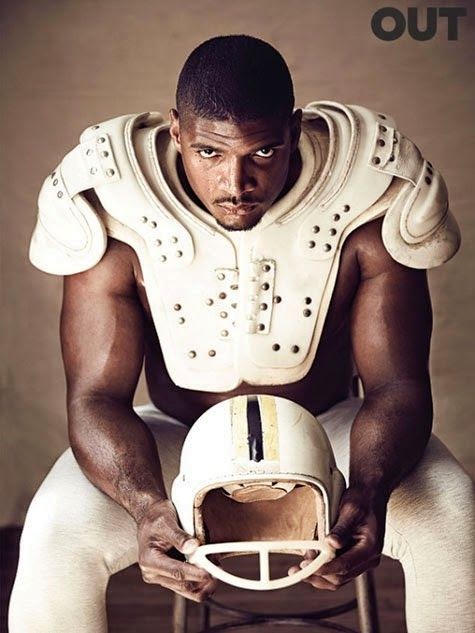
The world of sports has been enduring a rather bumpy ride of late, and no one is dealing (quite poorly) with more turbulence than NFL commissioner Roger Goodell.  If his league received any positive publicity regarding gay rights when all eyes were on Michael Sam during the draft, it has quickly been squandered one controversy after another.  As appetizer, the Washington Redskins are under more heat than ever before to change their racist name.  Had the league pressured the team to comply, Goodell could have placed it on the right side of history.  Instead the issue remains a case of team owner Dan Snyder refusing to cater to people’s racial sensitivities while the league looks away.


Squabbling over a team name is nothing compared to what took place next.  Ray Rice was somewhat improbably forgiven by his girlfriend for punching her into a state of unconsciousness.  Now Janay is Mrs. Ray Rice and the two of them are a united front against those declaring that something needs to be done to discourage domestic violence.  Roger Goodell was in as nearly a forgiving mood as Janay, suspending Ray for a mere two games.  That was before TMZ showed us the rest of the tape, the portion showing not just Ray dragging Janay’s body out of the elevator in nonchalant fashion, but the punch that preceded it.  Goodell tried some too little too late maneuvering by declaring that future domestic violence offenses will result in no less than a 6-game suspension.  Eventually he did a 360 and suspended Ray Rice indefinitely.  He thought we would accept his claim that he had never seen the entire video tape prior to TMZ’s public release of it, so that’s why his initial punishment was so lenient.  Nobody bought it.


We weren’t over being angry at Roger for completely mishandling Ray Rice’s transgressions when Adrian Peterson went and got himself indicted for abusing one of his kids.  Did AP possibly think it was an acceptable form of discipline to whip a 4 year old with a switch so severely that it left the back of child's legs looking like he was on the set of 12 Years a Slave?  Oh yes he did.  Reggie Bush chiming in that if necessary he’ll harshly discipline his own 1 year old daughter because tough love is what it’s all about certainly didn’t help matters.  In their infinite wisdom the Minnesota Vikings decided that since Peterson hasn’t been convicted of a crime yet, he could continue playing and not miss so much as a single game.  After public outcry and major corporate sponsors threatening to jump ship, they thought better of it.  Goodell has barely made a peep about Adrian Peterson, still licking his wounds while an investigation is underway regarding his bungling of Ray Rice.  Add names such as Greg Hardy and Ray McDonald and Jonathan Dwyer to the pile of problems that Goodell should be taking care of rather than hiding under his desk.  Agreement on a new drug policy is certainly not the cure to what ails him.  It’s barely window dressing on a gaping wound.


Ray Rice is appealing his suspension. Punishing him sufficiently in the first place would have made life much easier for Roger Goodell. 6 to 8 games probably would have been satisfactory to many who rightfully felt 2 games was ridiculous.  It remains to be seen how lawyers will advise Adrian Peterson to counter.  Since he hasn’t plead guilty or been convicted of a crime, he may have a strong case down the line.  Roger Goodell just wants it to all go away.  But the only way for that to happen may be for him to go away, leaving the NFL commissioner job in somebody else’s hands.

If Goodell is replaced, the new guy/gal may want to study the playbook of NBA commissioner Adam Silver.  Hit with drama almost immediately after taking over for David Stern, Silver has fared well as the new sheriff in town.  I was surprised by how harshly he dealt with Donald Sterling and thought it might blow up in his face, but Silver stood his ground and Sterling tearfully slunk away looking like a crazy old bigot best quickly forgotten.  Perhaps Silver has simply been lucky so far.  Or it could be he’s the smarter commissioner who knows the best way to deal with a troublesome situation is to confront and strongly impose your moral code upon it.    


There were plenty who disagreed with how Goodell handled the Saints in their Bounty-gate scandal, felt his reaction was too severe, but at least Roger came off as a man of conviction with intolerance of violence not so long ago.  Once upon a time Roger Goodell was the tough love guy in charge.  Now he looks like a guy who is in way over his head.  



But when it comes to being lenient on cash cow athletes, he is certainly not alone.


Monday, August 11, 2014

No Justice - No Peace - No Think Piece - Just Grief

R.I.P. Mike Brown.  R.I.P. Eric Garner.  R.I.P. John Crawford.

The lives of these 3 young black men appear to have been needlessly lost.
One was unarmed and had his hands raised in the air according to witnesses.
One was selling cigarettes.
One was holding an air rifle alone in the aisle of a store that sells them to the public in an open carry state.
They were each killed by police officers who were supposed to protect and serve them.
When will violence stop leading to fear of violence which leads right back to violence?
When will enough be enough?


Why Black Men Don't Open Carry


#FERGUSON


Tuesday, July 29, 2014

THE RIDE HOME - #ShortStory


Collin Walker boarded the 1 train bound towards his sparsely decorated, dimly lit, undersized and overpriced apartment on the Upper West Side of Manhattan.  He was accompanied for a portion of the ride by three co-workers.  The quartet of stockbrokers had just departed an office holiday party on Wall Street where the alcohol had been free and plentiful. 

Collin did not regularly fraternize with Doug, Randall, or Brandon. Outside of their shared love of making vast sums of money on paper, he did not have much in common with these men.  Yet due to many hours spent together in confined quarters riding the impetuous charges of bulls and bears, they were his closest acquaintances, coming as close to friendship with him as anyone else managed.  Collin held nothing in particular against fellow members of the human race.  He simply had yet to find the company of another living soul preferable to neatly arranged solitude.

He bestowed smiles as a miser spends his money, released laughter like a devout nun experiencing pleasures of the flesh, with great reservation and only on the most holy of days.  Collin would often flinch when innocently approached from behind, as easily startled as a sleepy infant.  It was as if he pretended away the existence of other people to make his surroundings more palatable, only to be shocked by harsh reality when reminded of someone else’s presence.  At first his colleagues teased him for his awkward discomfort with contact and personal interaction.  Eventually they determined that it was best to just leave him alone.

Therefore on occasions as rare as today when his senses were assailed by rum and coke and he let loose his tightly wound persona, it was a treat for those who knew what he was usually like.  Throughout the party Collin told rambling jokes that evoked laughter based on their manic delivery rather than the punch lines; indulged in forms of physical expression seldom utilized by him such as back slaps and shoulder punches; and flirted with a lack of skill that was nearly made up for by the novelty of his efforts.  This year he had been in particularly rare form with a barely recognizable Michael Jackson dance imitation on top of a receptionist's desk.


"That was some shindig," said Doug, quite noticeably the shortest of the group at only five feet four inches tall, making him the butt of many a private and sometimes public joke.  He always pretended not to mind, to be amused by this curse of fate while mentally cataloging every slight for future spiteful reference.

"You think the big guy will like our gift?" asked Brandon, the youngest of them at 24 years old.  He was two years out of New York University and considered a stock trading boy wonder.

"He likes anything he gets for free," said Randall, the elder statesman at age 58.  Randall considered himself to be a mentor to his peers, but was alone in this opinion.

"We should've pitched in to buy him a toupee that fits," Collin said, collapsing in a fit of cackling that was a reasonable facsimile of laughter from one so unversed in the art.

“I think he’s having an affair with Evelyn,” said Doug.

"No way," said Brandon.  "Why would a gorgeous woman like her sleep with him?"

"Because he's the boss and she's incompetent, sonny boy," Randall replied.  His fear of being retired early to make room for more hot shots like Brandon was not always as well camouflaged as intended.


An elderly man dressed in rags and emitting a rather foul odor entered from the adjoining car, temporarily interrupting the gossip session.
    
"Excuse me, gentlemen.  Could any of you spare..."

"No I cannot spare any change, and I don't want to hear the sad story of your life either," Doug answered.  "Can't you just get a job at McDonalds or something?"

"God bless you, sir."

"Here you go," said Brandon, putting a bill into the paper cup in the man's hands.  "Have a merry Christmas."

"Merry Christmas to you too."  The frail mendicant moved along to solicit the next passenger.

"You shouldn't be such a sap," advised Collin.  He made this statement while clinging to the straphangers as if quicksand was beneath his feet. 

"It's only a dollar," said Brandon in defense of his generosity, although it seemed ludicrous justifying himself to a man who appeared to be impersonating a chimpanzee.  "Besides, he wasn't as annoying as most of them, and it is almost Christmas."

"There’s got to be one of them per square foot in this city," said Randall.  "If I gave a quarter to each one who asked, I'd be bankrupt in a week.”   

"The dollar you gave away is going to be spent on a vial of crack," pronounced Doug.

“And that’s wack,” Collin piped in, tickled by how something so commonplace as liquor had released his poetic side.  

Brandon dropped the subject.  He hadn't been out in the business world long enough to risk arguing on subjects as frivolous to these men as compassion and humanity.  He preferred to sit quietly and listen with equal attention to their words of wisdom or foolishness.  Eventually he'd be making the kind of money guys like them hadn't even dreamt of.  If all went according to Brandon’s plans, they would be working for him some day.  Then he would fire them to bring in new blood.


The train pulled into the next station.  Getting on was a teenager carrying a bulky radio.  A rap song blared from its speakers in defiance of subway rules.  The young man stared the Wall Streeters down to ward off in advance any statements of disapproval.

"Any of you guys got the time?" he asked.

The question was followed by a loud thud, which turned out to be the result of Collin stretching to look at his watch, after which he lost his grip on the straphangers and rapidly descended to the floor. 

"It's almost one," he said upon landing.

"Thanks, homes.  Happy Kwanzaa."  The kid did their eardrums a favor and went into the next car.  Collin's antics had taken him off guard, and he tended to avoid white people whose actions he couldn't predict.

"They complain they're not advancing because of prejudice," Randall pointed out quietly, after checking to be certain that the nearest person in possession of more melanin than himself was beyond hearing range.  "Bigotry has nothing to do with it.  It's all in the image you project.  You come across like that and no one's going to want to hire you. It's that simple." 

No less than eighty percent of Randall’s opinions on complex societal matters were concluded with the words – It’s that simple.

"I like Bennett," Doug said, speaking of the lone African- American who worked in their department.  "He's a good man.  He does his job very well."

"Bennett's an exception to the rule," Randall said.  He could become quite testy when one of his expert opinions was refuted.  "There's a lot more like the guy just in here playing that hippity hop music."

Brandon, whose girlfriend unbeknownst to his co-workers happened to be black, decided to contain his temper and sway the conversation in another direction.  "Loved your dance routine at the office, Collin.  Ever think of getting out of Wall Street and going into the music business?"

Collin rose unsteadily, shaken like a pair of die by the swerving train and alcohol swishing in his bloodstream.  "There's certainly plenty of money in it,” he said.  “Michael Jackson, look out!"  He attempted a mid-80’s Jacksonesque spin, completely unaware that the singer was much more likely of late to be found defending himself in a courtroom or selling off assets to avoid bankruptcy than at the top of music charts, and ended up on the seat of his pants again.

"Bravo!" his associates cheered, applauding as he stood up and took a bow.

On the opposite end of the subway car, a thin Caucasian man in well worn fatigues entered.  A scruffy beard failed to fully conceal the scar that ran from his left ear to mid-cheek.  His pale blue eyes were vacant like a blind man's, but he could see.  One immediately got the feeling that he had seen too much.  He limped forward with grave determination, unsteadily navigating around shopping bags full of Christmas gifts that sat on the floor in front of several passengers, briefly telling his hard luck story to each of them before futilely holding out his hand.  Finally he reached the Wall Street revelers, sixty five cents richer than he had been at the start of his journey.

"Hello, gentlemen.  If any of you could spare some change, I'd really appreciate it.  I have a metal plate in my head and a bum leg from the war, and the government ain't paying me a dime."

Brandon kept his hands away from his wallet so as not to risk further chastisement for his philanthropy.  Doug mentally measured the beggar, sizing him at just over six feet tall, thinking how unfair it was that the gift of height had been bestowed upon someone so undeserving.  Then he mentally recited the phone number of his favorite escort service, for he would be dialing it tonight, and those ladies always made him feel like a giant.  Randall spared the beggar only a look of disdain, followed by a yawn of disinterest. As for Collin, the expression on his face suggested that he had been slapped into sudden sobriety.  He turned away from the beggar as if from a former lover he was simultaneously ashamed, embarrassed, and disturbed to have run into.

"I think I'll rest my bones for a few minutes," the beggar said, sitting opposite them and closing his eyes.  "This cold weather really stiffens up my leg." 

For the next few minutes the only sound to be heard was that of the train racing along the tracks, its steady rhythm hypnotic.  The co-workers’ desire to socialize had run out of steam, the alcohol in their respective systems reversing direction, bringing each of them haphazardly down from the peaks they had been brought to.  Tranquility was ended when the beggar began muttering in his sleep.  He was apparently having a bad dream, for he twisted and turned in his seat.  Then his eyes shot wide open.


"Oh God, no!"  He shielded his head with his arms.  "I don't wanna die, I don't wanna die!"  In pantomime he proceeded to shoot an imaginary rifle at an invisible foe.  "Die bastards, die!" 

As unexpectedly as the flashback began, it ended.  The beggar lowered his arms and his breathing returned to normal.  His aimless glare was all that remained of the episode.

The other passengers looked at him curiously, but none with the intensity of Collin who recognized the expression that had been in the beggar's eyes during his episode.  Absolute rage amalgamated with perfect fear.  It was the same expression Collin possessed on a humid night in a dense jungle of Vietnam years earlier.  It was on that night that he came across an injured Vietnamese soldier clutching his blood soaked, useless right leg. 

Collin saw right away that the soldier's weapon lay five feet away, impossible for him to reach any time soon.  He was no threat to anyone.  Life had already left one of his legs, and unless he was given medical treatment, it would soon leave the rest of him.

No one could hate the war as much as Collin did.  From the moment he set foot on that God forsaken corner of the globe he was in a continual state of paralyzing terror.  Prior to then he had thought of himself as a brave man, though for no particular reason.  His belief was theoretical rather than practical.  His manhood was yet to have been tested.

As soon as he stepped out of the helicopter and into Asia, fear became an intimate friend who would never leave his side.  It would accompany him throughout his tour of duty.  Then it would go along for the ride back to America, walking beside him like a faithful dog.  Whenever he was out on the streets late at night and a shadow moved, or he heard footsteps behind him, or a stranger's eyes rested too long on his own, there it was, causing the most harmless of circumstances to seem life and death.  He tried to ignore it, figured if he kept busy with other matters he would have no time for it.  But fear always made time for him.  Death always seemed to be lurking nearby.

The Vietnamese soldier's face showed no reaction when Collin raised his rifle.  Perhaps his pain did not allow any emotion to be expressed.  Maybe his soul was prepared to take leave of the earth. He may have gone through the war as frightened as Collin, and was relieved that in a moment he would finally be free.  
    
It seemed an eternity passed as Collin stood poised to kill.  He had fired into moving brush and shifting shadows before, but never face to face.  Collin may have killed men, but didn't know for sure.  This time he would.

Collin stood trembling while the soldier stared passively at him. Why wouldn't he get up and charge?  Why wouldn't he make a lunge for his gun?  If only he would do something, anything to force the issue.  Enemy or not, war or not, if he didn't move and Collin fired, it would be murder.  But it would also be one less enemy to fear.

How dare he lie there with no chance of overcoming his foe, yet be so calm?  Why was Collin, in the stance of an invincible killing machine, incapacitated?

This man represented all he had been trained to hate.  But could justification be found for killing a helpless, defenseless man?

In a language Collin would never understand, the soldier began to speak.  It may have been a plea, a prayer, or a curse.  Collin would never know, and his trigger finger did not allow the sentence to be completed.

"One dollar."


Collin turned towards the voice that had brought him tumbling back to the present.  It belonged to a Korean man with a shopping bag at his feet.  His arm was outstretched, and spinning on the palm of his hand was a clear plastic top with a light inside.  It made a whistling sound as it spun.  He put the top into the bag and took out what appeared to be a bobble head doll.  Collin had to smile when he pushed down on the boy's head and a stream of water shot out as if he were peeing.

"Tree dollar."

But Collin’s smile vanished when he noticed a glint of steel.  The homeless veteran seated across from him slowly withdrew a dagger from the back of his boot.  His glare was not aimless or far away anymore.  It was focused on the target at hand.  He stood up, concealing the knife between his arm and body, and began walking towards the unsuspecting peddler.  With the exception of Collin and those who were ignoring the scene altogether to ponder what more they still had left to purchase for the holiday, everyone's eyes were on the Korean man and his bag of treats.  Some were reaching into wallets and purses to buy their final low budget Christmas gift of the day, while others were waiting to see what else he had to sell.  None knew that he was about to die.

The war veteran was about three steps away from his would be victim when Collin tackled him, knocking into the peddler in the process. This altered Collin's momentum, so it was he who ended up on the bottom when they hit the ground.  Stronger than he looked, the veteran was able to break free from Collin's grasp, deliver a punch to the jaw, then retrieve his weapon.

The dagger was held menacingly over Collin's throat.  Tears crept from his eyes and his bowels also threatened to let loose their liquid.  A feeling of self-loathing overcame him.  Hunter or hunted, he was a coward.  He had managed to summon enough courage to attack a battered homeless man from behind, but that seemed to be the extent of his bravado.  Now that he was forced to encounter danger head on, he could do no more than cower and shiver like an old woman in a cold rain.  Fear clung to him like vines on a trellis.

As Collin awaited the inevitable, he noticed a change in his captor's expression.  The veteran gave Collin a knowing smile.  What was it that he knew?  That Collin wasn't worth killing, because he was no threat whatsoever?  That he was about as dangerous as a dying Vietnamese soldier with one good leg?

The once proud warrior, now homeless vagrant, rose to his feet and headed towards his original target.  The Korean man lay on the ground, somewhat disoriented because his head had hit the floor.  His expression conveyed the same look of surrender possessed by the soldier Collin had killed years earlier. 

Anger, hatred, and a sense of betrayal harbored far too long were set to be unleashed because the slant of a man’s eyes reminded the discarded hero of the time and place where his future was stolen from him.  This is why Collin had been spared.  The veteran didn't want to waste any of his fury on a fellow American.

Surely someone would stop him, Collin thought.  Then again, maybe it wasn't so certain.  They resided in the city of non-involvement, and it was only a foreigner who spoke broken English and sold toys on the subway who was about to die, not anybody who mattered.  He would be slain in front of a moving studio audience. The veteran probably did not even realize that he was attacking an innocent man on a New York City subway.  The jungle he believed himself to be in was not of the concrete variety.  His mind had brought him back to the hell he had been condemned to years ago for the sin of being a healthy young man during wartime.

Collin finally understood what the eyes of the Vietnamese soldier he killed had been conveying.  It wasn't a message of peace, or acceptance, or relief.  It was questioning.  His eyes were asking - "Why me?" Could justification be found for killing a helpless, defenseless man?

In answer to the question, Collin sprung to his feet and charged at the veteran, driving him hard into a door of the subway car.  The veteran crumbled to the ground, no longer a danger to anyone. The peddler, realizing his life had been saved yet again, looked up more in wonder than gratitude.  And Collin, with the knife now protruding from his abdomen, dropped down to one knee, vaguely aware of the queries of his worried co-workers, but preoccupied by the fact that he would probably die staring at a plastic boy with a bladder control problem.  Fear was nowhere to be found.  His old traveling companion, his one true friend, had finally departed.

The lights went out.  Collin did not know if this was due to a commonplace glitch in the train's electrical system brought about by alleged under-funding that would inevitably lead to yet another fare hike.  Of if it was because his ride home had officially begun. 


THE END


IT WAS A WISE MAN WHO FIRST SAID "WAR IS HELL".


Wednesday, July 16, 2014

Rules to Write By

Dearest scribblers of words.  Follow the prose writing rules you'll find below religiously.  Or else break them at your own risk because writers at heart are rebels with a cause.  At the very least though, make sure that your blog posts pass the "Weird Al" test.  Happy Writing! - RLP


Elmore Leonard’s 10 Rules of Writing


These are rules I've picked up along the way to help me remain invisible when I’m writing a book, to help me show rather than tell what’s taking place in the story. If you have a facility for language and imagery and the sound of your voice pleases you, invisibility is not what you are after, and you can skip the rules. Still, you might look them over.

  1. Never open a book with weather.
  2. If it’s only to create atmosphere, and not a character’s reaction to the weather, you don’t want to go on too long. The reader is apt to leaf ahead looking for people. There are exceptions. If you happen to be Barry Lopez, who has more ways to describe ice and snow than an Eskimo, you can do all the weather reporting you want.
  3. Avoid prologues.
  4. They can be annoying, especially a prologue following an introduction that comes after a foreword. But these are ordinarily found in nonfiction. A prologue in a novel is backstory, and you can drop it in anywhere you want.
    There is a prologue in John Steinbeck’s Sweet Thursday, but it’s O.K. because a character in the book makes the point of what my rules are all about. He says: “I like a lot of talk in a book and I don’t like to have nobody tell me what the guy that’s talking looks like. I want to figure out what he looks like from the way he talks. . . . figure out what the guy’s thinking from what he says. I like some description but not too much of that. . . . Sometimes I want a book to break loose with a bunch of hooptedoodle. . . . Spin up some pretty words maybe or sing a little song with language. That’s nice. But I wish it was set aside so I don’t have to read it. I don’t want hooptedoodle to get mixed up with the story.”
  5. Never use a verb other than “said” to carry dialogue.
  6. The line of dialogue belongs to the character; the verb is the writer sticking his nose in. But said is far less intrusive than grumbled, gasped, cautioned, lied. I once noticed Mary McCarthy ending a line of dialogue with “she asseverated,” and had to stop reading to get the dictionary.
  7. Never use an adverb to modify the verb “said” …
  8. …he admonished gravely. To use an adverb this way (or almost any way) is a mortal sin. The writer is now exposing himself in earnest, using a word that distracts and can interrupt the rhythm of the exchange. I have a character in one of my books tell how she used to write historical romances “full of rape and adverbs.”
  9. Keep your exclamation points under control.
  10. You are allowed no more than two or three per 100,000 words of prose. If you have the knack of playing with exclaimers the way Tom Wolfe does, you can throw them in by the handful.
  11. Never use the words “suddenly” or “all hell broke loose.”
  12. This rule doesn’t require an explanation. I have noticed that writers who use “suddenly” tend to exercise less control in the application of exclamation points.
  13. Use regional dialect, patois, sparingly.
  14. Once you start spelling words in dialogue phonetically and loading the page with apostrophes, you won’t be able to stop. Notice the way Annie Proulx captures the flavor of Wyoming voices in her book of short storiesClose Range.
  15. Avoid detailed descriptions of characters.
  16. Which Steinbeck covered. In Ernest Hemingway’s Hills Like White Elephants what do the “American and the girl with him” look like? “She had taken off her hat and put it on the table.” That’s the only reference to a physical description in the story, and yet we see the couple and know them by their tones of voice, with not one adverb in sight.
  17. Don’t go into great detail describing places and things.
  18. Unless you’re Margaret Atwood and can paint scenes with language or write landscapes in the style of Jim Harrison. But even if you’re good at it, you don’t want descriptions that bring the action, the flow of the story, to a standstill.
    And finally:
  19. Try to leave out the part that readers tend to skip.
  20. A rule that came to mind in 1983. Think of what you skip reading a novel: thick paragraphs of prose you can see have too many words in them. What the writer is doing, he’s writing, perpetrating hooptedoodle, perhaps taking another shot at the weather, or has gone into the character’s head, and the reader either knows what the guy’s thinking or doesn’t care. I’ll bet you don’t skip dialogue.
    My most important rule is one that sums up the 10.
    If it sounds like writing, I rewrite it.

Here's what a few other writers have had to say about the art of writing:

The tension between standing apart and being fully involved; that is what makes a writer. That is where we begin. ~ Nadine Gordimer

The right word may be effective, but no word was ever as effective as a rightly timed pause. ~ Mark Twain

You have to surrender to the act of writing, give up to it, and trust that if you have anything, It will discover it for you.
~ E.L. Doctorow
Literature is the ditch I'm going to die in. It's still the thing I care most about. ~ Thomas McGuane

You may think I never make it to a second chapter because I play it by ear and depend on inspiration which never comes.  In fact, the reason I stop writing is because I am not creating a masterpiece and would rather stop and try again than carry on with mediocrity.  I prefer failing at greatness to succeeding with something commonplace. ~ from FEEDING THE SQUIRRELS (by yours truly) 


In addition to rules for writing, perhaps someone needs to write up some rules for civilized book publishing/selling.  There's a war taking place in the publishing industry, which of course means that there have been plenty of casualties.

WRITER LIFE PINTEREST BOARD